
By Dr. Kathryn Dundas, MD, CCFP
Sublime Life | The Journal
January isn’t about pushing harder.
It’s about repair.
Repair is what happens when the body finally has enough safety, rhythm, and rest to do what it’s always been trying to do in the background—restore balance.
One of the most powerful (and misunderstood) repair systems in the body is something called methylation. And it lives at the intersection of genetics, lifestyle, sleep, and stress.
Let’s demystify it.
You may have heard this before, but it’s worth repeating—especially in January:
Only about 10% of what happens to you is determined by your genes.
The other 90% is influenced by how those genes are expressed.
That’s where epigenetics comes in.
Genetics is the blueprint you’re born with.Epigenetics is how that blueprint is read, interpreted, turned up, turned down—or temporarily silenced.
You don’t change your genes.
You change the signals acting on them.
Think of your DNA as a massive instruction manual.
Epigenetics is like:
Stress, sleep, nutrition, toxins, movement, light exposure—these all place sticky notes on your genes.
Some signals encourage repair.
Others interrupt it.
And one of the main systems that places those signals is methylation.
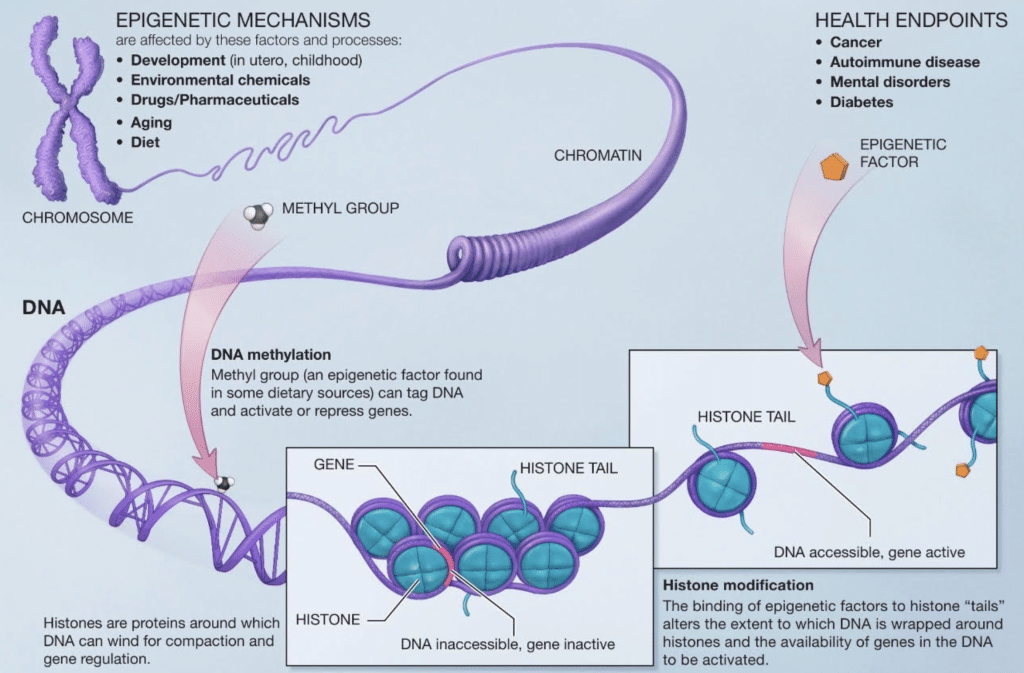
Methylation is a biochemical process that helps your body:
If epigenetics is the messaging system, methylation is the courier delivering those messages.
When methylation is supported, the body knows:
When it’s overwhelmed or under-supported, things get noisy—fatigue, anxiety, poor sleep, inflammation, hormonal imbalance.
The good news?
Methylation is highly responsive to lifestyle.
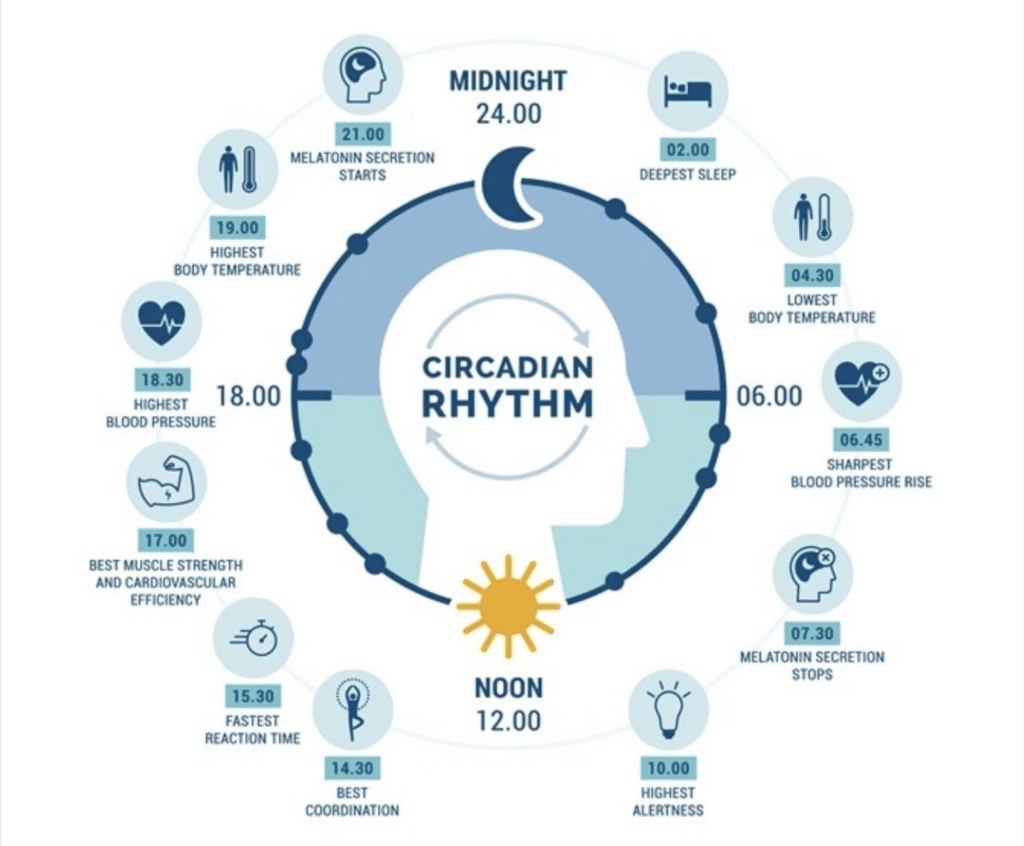
Some of the deepest repair processes—DNA repair, cellular cleanup (autophagy), hormone recalibration—happen while you sleep.
There’s a reason you’ve heard about the 10 pm–2 am window.
Think of it as the body’s prime repair shift.
For some people, especially night owls, a slightly shifted window—11 pm–3 am—can still work if sleep is deep, regular, and protected.
But missing the first hour of your personal repair window matters.
That’s when the body initiates its most restorative processes.
Late nights don’t just reduce sleep time—they delay repair signals.
Your body runs on clocks—plural.
Circadian rhythm isn’t about perfection; it’s about consistency.
Light tells your body when to:
In places like Calgary and the northern hemisphere, winter mornings are dark. That matters.
When the brain doesn’t get a clear “morning light” signal, it can:
That’s why sunrise-style alarm clocks can be powerful.
They gently cue the brain: it’s morning now—even when the sun hasn’t caught up yet.
January repair doesn’t require a complete life overhaul.
It looks like:
This is not optimization.
This is permission for your body to do its job.
Your body is not broken.
It’s responding.
And when you support repair—through sleep, rhythm, nourishment, and gentler signals—you’re not fighting your biology.
You’re finally working with it.
Methylation doesn’t need “hacks.”
It needs raw materials and rhythm.
These nutrients act like the paper, ink, and envelopes that help your body place the right epigenetic “notes” on your genes:
These nutrients don’t force methylation.
They support the body’s own intelligence
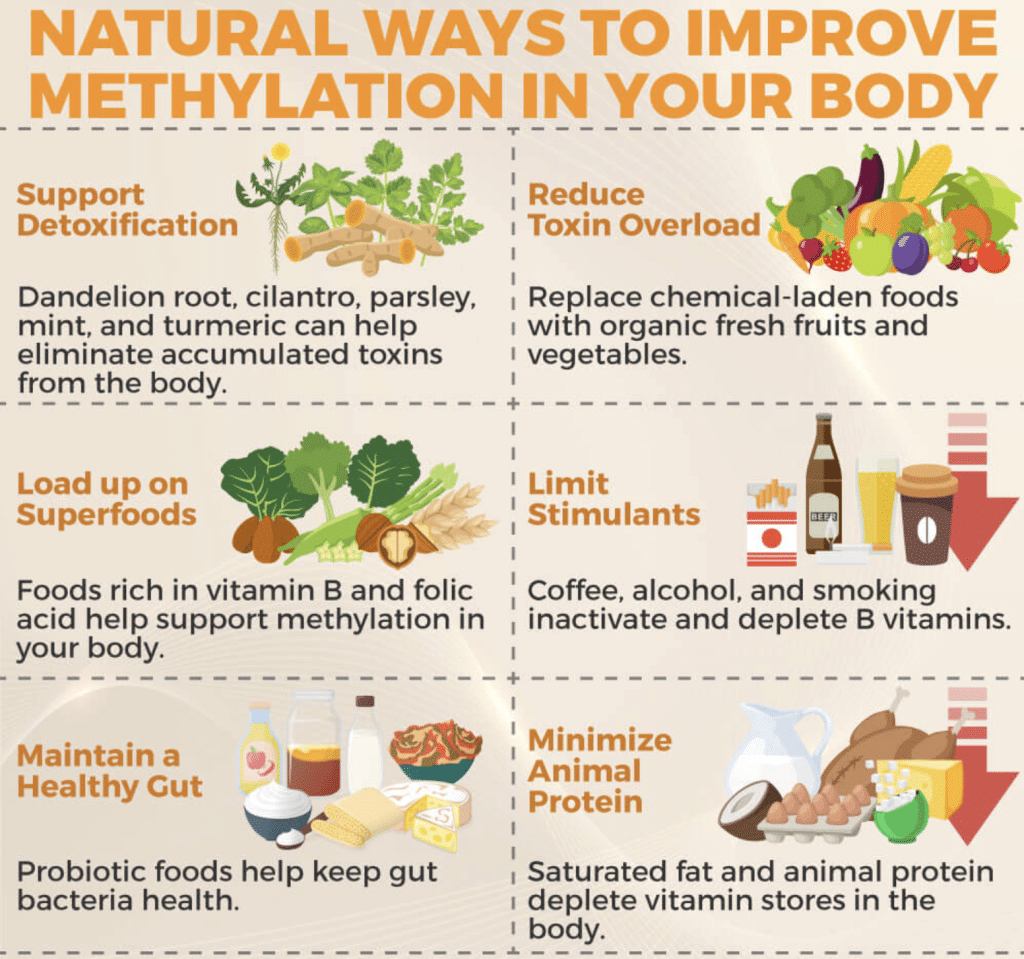
Some of the most methylation-supportive foods are beautifully simple:
Consistency matters more than perfection.
For some people—especially those under chronic stress, with sleep disruption, or known genetic variants—targeted B-complex support can be helpful.
If supplements are used, they should feel:
This is repair work, not acceleration.
No nutrient replaces:
Methylation responds to signals, not pressure.
Repair is cumulative.
Small supports, repeated daily, change expression over time.
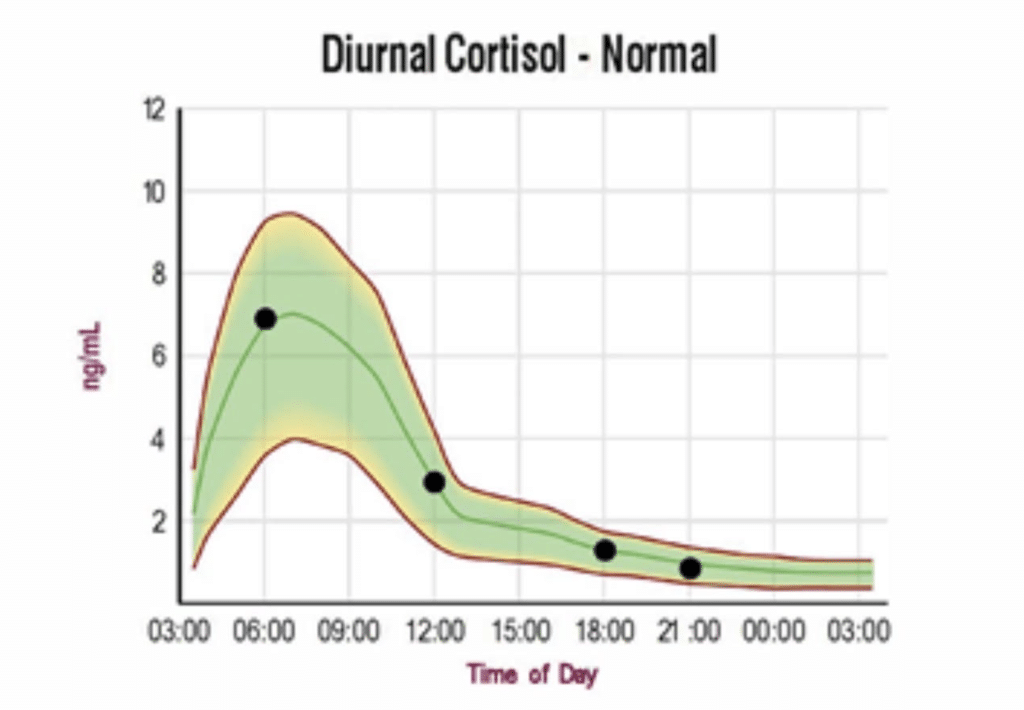
If methylation is the courier, cortisol is the traffic signal.
Cortisol doesn’t just measure stress — it tells us whether the body is getting the timing right.
A 4-point cortisol test looks at cortisol levels:
This matters because repair depends on rhythm.
When cortisol is:
For January, this test isn’t about diagnosis — it’s about orientation.
It helps answer:
Data can guide repair — without becoming something to chase.
Royal jelly is one of nature’s quiet repair agents.
It doesn’t stimulate.
It nourishes.
Traditionally used to support:
Royal jelly fits beautifully into January because it supports repair without overriding the body’s own signaling.
Think of it as:
In a month focused on rebuilding foundations, this is not about doing more — it’s about feeding what’s already working behind the scenes.
Together, they reinforce the January message:
Understand your signals.
Support gently.
Let biology lead.
Make presence your protocol.
Repair follows.
— Dr. Kathryn Dundas, MD, CCFP