
By Dr. Kathryn Dundas, MD, CCFPSublime Life | The Journal
I’ve always been able to drink coffee at almost any hour of the day.
Morning coffee. Afternoon coffee. Dinner coffee. Sometimes even an espresso after dinner.
To the horror of many of my friends, I can still go to bed and sleep just fine.
For years, I assumed I had simply built up a tolerance to caffeine. Then I completed nutrigenomic testing and discovered something interesting: my genes suggested that I metabolize caffeine differently than many people.
Suddenly, something I had observed throughout my life made a little more sense.
That is what I find most fascinating about nutrigenomics.
Not that it predicts the future.
Not that it tells us exactly what to eat.
But that it helps explain why.
Why one person thrives on a particular way of eating while another struggles.
Why some people are highly sensitive to caffeine while others barely notice it.
Why some individuals see dramatic improvements in cholesterol with dietary changes while others experience very little change.
Why one person recovers quickly from exercise while another requires more recovery time.
Why some people may be more susceptible to certain injuries than others.
As a physician, I find that incredibly interesting.
What Is Nutrigenomics?
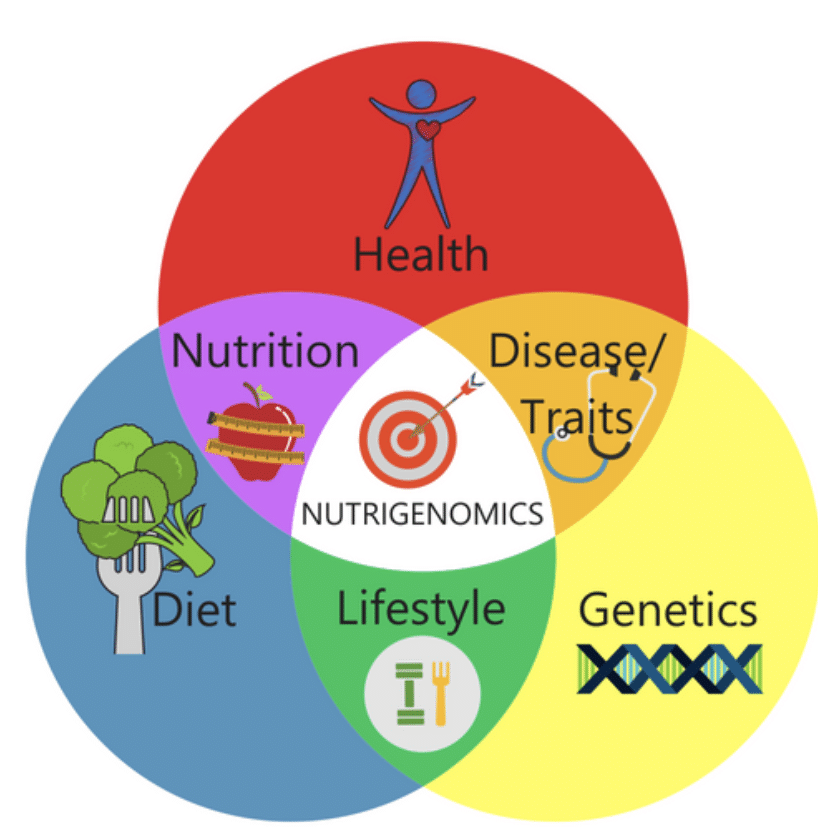
Nutrigenomics is the study of how our genes influence our response to nutrients, foods, exercise, and lifestyle interventions.
It examines genetic variations that may affect things such as:
Importantly, nutrigenomics is not about disease prediction.
It’s about optimization.
The goal is not to determine your destiny.
The goal is to better understand the system you’re working with.
We Are Not All Built the Same
For years, nutrition advice has largely been based on population averages.
Eat this. Avoid that. Follow this diet.
Yet anyone who has spent time working with patients knows that humans are wonderfully inconsistent.
The same nutrition plan can produce dramatically different results in different people.
One person loses weight easily.
Another doesn’t.
One person’s cholesterol improves.
Another’s worsens.
One person feels energized.
Another feels exhausted.
This doesn’t mean the advice is wrong.
It simply means that biology is more nuanced than we once believed.
Nutrigenomics is helping us understand some of those nuances.
My Achilles Tendon Story
One result in my own testing stood out immediately.
Several years ago, I ruptured my Achilles tendon.
At the time, I viewed it as one of those unfortunate events that can happen despite being active and healthy.
Years later, I discovered I carry a variation in the COL5A1 gene, which plays a role in collagen formation and connective tissue structure. Certain variants of this gene have been associated with an increased susceptibility to Achilles tendon injuries, including tendinopathy and rupture.
Did that gene cause my rupture?
Of course not.
Injuries are complex.
Training, recovery, biomechanics, hormones, age, and simple chance all contribute.
But I found it fascinating that a piece of my genetic blueprint aligned with an event that had already occurred.
The result didn’t change the past. It simply helped explain it.
And perhaps that’s where nutrigenomics provides some of its greatest value.
Beyond Nutrition: Heart and Brain Health
Some of the most exciting areas of nutrigenomic research involve cardiovascular and cognitive health.
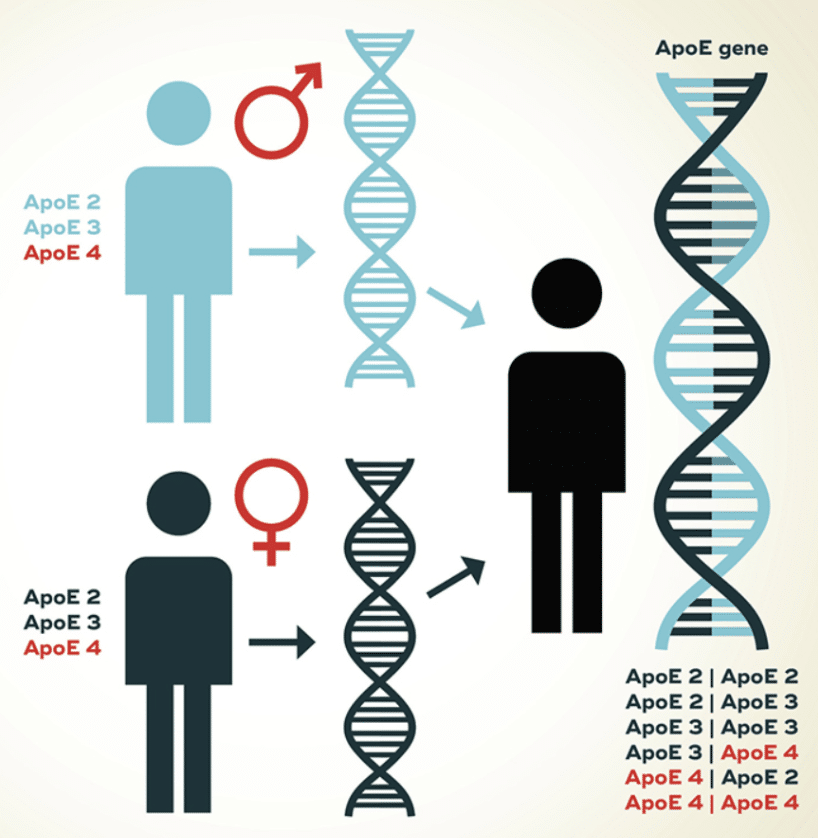
One of the best studied genes is APOE.
Vital Creatine
Many people are familiar with APOE because certain variants,
particularly APOE4, have been associated with an increased risk of
both cardiovascular disease and Alzheimer’s disease. APOE also
plays an important role in how cholesterol is transported
throughout the body and brain. Research suggests that individuals
carrying APOE4 may be more sensitive to dietary saturated fat
and cholesterol, often demonstrating greater changes in
blood lipid levels in response to dietary intake. (Cambridge
University Press & Assessment)
This is where nutrigenomics becomes clinically interesting.
Two individuals may consume identical diets, yet their cholesterol responses may be very different. Understanding genetic predispositions may help explain why one person’s LDL cholesterol rises significantly while another person’s remains stable. (PMC)
Similarly, genes involved in omega-3 metabolism, including FADS1 and FADS2, influence how efficiently we convert plant-based omega-3 fats into the biologically active forms EPA and DHA. Some individuals perform this conversion quite effectively, while others may benefit from obtaining more direct sources of EPA and DHA from fish or supplementation. (Frontiers)
As our understanding of these pathways continues to evolve, the potential to personalize nutrition strategies for cardiovascular and cognitive health becomes increasingly compelling.
Information Creates Opportunity
One of the biggest misconceptions about genetics is the belief that genes determine our future.
They do not.
Genes may influence predispositions, but lifestyle remains extraordinarily powerful.
Nutrition, movement, sleep, stress management, relationships, environmental exposures, and daily habits all influence how our genes are expressed.
This is why I view nutrigenomics as a tool for optimization rather than prediction.
When we understand more about how our bodies function, we have the opportunity to make more informed decisions.
Perhaps that means adjusting caffeine intake.
Perhaps it means paying closer attention to recovery.
Perhaps it means emphasizing certain nutrients.
Perhaps it means understanding that what works beautifully for someone else may not be the optimal approach for us.
None of this guarantees outcomes.
But it provides information.
And information creates opportunity.
The Future of Personalized Nutrition
I believe the future of healthcare will continue moving away from one-size-fits-all recommendations and toward greater personalization.
Not because genetics are everything.
Far from it.
Nutrition, exercise, sleep, stress management, relationships, and environment remain extraordinarily important.
But genetics can help us better understand how those factors interact with our individual biology.
For me, that is the promise of nutrigenomics.
Not prediction.
Not perfection.
Optimization.
Because when we better understand our biology, we can make better decisions about how we nourish, train, recover, and ultimately how we age.
Vital Creatine
Still one of the most underrated longevity tools available.
At Sublime Life, we offer nutrigenomic testing designed to
provide insight into nutrition, metabolism, exercise performance,
recovery, and skin health.
Available options include:
Comprehensive Nutrigenomics Panel
Provides insight into nutrition, metabolism, nutrient utilization, eating behaviours, and personalized lifestyle recommendations.
Sport and Performance Panel
Explores exercise response, recovery, endurance, power, injury susceptibility, and athletic performance.
Skin Health Panel
Evaluates genetic factors related to collagen pathways, oxidative stress, inflammation, skin aging, and healthy skin support.
While no test can tell us everything, nutrigenomics can provide valuable information that helps guide more personalized decisions and support long-term health optimization.
As always,
Make Presence Your Protocol.
Dr. Kathryn Dundas, MD, CCFP
Founder & Medical Director
Sublime Life