
By Dr. Kathryn Dundas, MD, CCFP
Sublime Life | The Journal
Why the nervous system must feel safe before the body can truly sleep.
I hear it every week.
“I’m exhausted. But I can’t shut off.”
They fall asleep.
Then they wake at 3:17 a.m.
Their heart isn’t racing wildly.
But it’s alert.
Their brain is online.
They’re tired.
But not safe enough to surrender.
And that’s the part we often miss.
Because we’ve been taught that sleep is about fatigue.
Or melatonin.
Or magnesium.
Or screens.
Sometimes it is.
But often — especially in chronic insomnia — it’s about something deeper.
Sleep is not just a biological function.
It is a safety signal.
Sleep requires surrender.
Not collapse.
Not sedation.
Surrender.
And surrender only happens when the nervous system believes it is safe to power down.
If the body is still operating in subtle fight-or-flight — even if life looks stable on the outside — sleep fragments.
Sometimes this originates in trauma.
Sometimes it’s prolonged stress.
Sometimes it’s years of high-functioning hypervigilance.
Sometimes it’s simply habit — the nervous system has been “on” for so long that it no longer remembers how to turn off.
The sympathetic nervous system — our alert system — was designed for short bursts of activation.
Modern life rarely gives it short bursts.
Instead, we live in low-grade activation:
Deadlines.
News.
Notifications.
Performance.
Internal pressure.
Over time, the body adapts.
And adaptation can look like insomnia.
In clinical literature, chronic insomnia is often described as a disorder of hyperarousal.
Not just psychological.
Physiological.
We see:
The body is sleeping.
But not fully downshifted.
The hypothalamic–pituitary–adrenal axis (HPA axis) continues to fire quietly.
The hypothalamus releases corticotropin-releasing hormone (CRH).
CRH signals the pituitary gland to release adrenocorticotropic hormone (ACTH).
ACTH then signals the adrenal cortex to release cortisol.
Cortisol maintains alertness.
And even small elevations in evening cortisol can fragment REM sleep and increase nighttime awakenings.
When the hypothalamic-pituitary-adrenal axis stays active at night, the body remains biologically prepared for danger — not restoration.
The system isn’t broken.
It’s protecting.
The problem is: protection and restoration require different states.
And the body cannot deeply repair in sympathetic dominance.
“I Feel Safer When I’m Alert.”
This is the part I speak to often in clinic.
Some nervous systems learn that alertness equals safety.
If vigilance prevented overwhelm in the past, the body may default to vigilance.
Even in bed.
Even in a quiet room.
Even when nothing is happening.
The body does not power down simply because we want it to.
It powers down when it perceives safety.
And perception is biological.
This is where I gently challenge something common.
Sedation is not the same as restoration.
A medication can induce unconsciousness.
But that does not automatically:
Sleep architecture matters.
We cycle through light sleep, deep slow-wave sleep, and REM.
Each stage has purpose:
Memory consolidation.
Immune recalibration.
Metabolic regulation.
Emotional processing.
If sleep is fragmented, that cycling becomes less efficient.
And over time, that affects:
It is metabolic infrastructure.
Cognitive Behavioral Therapy for Insomnia (CBT-I) is often misunderstood.
It’s not generic counselling.
It’s structured nervous system retraining.
It works by:
It targets the perpetuating loop:
Poor sleep → Anxiety about sleep → Hyperarousal → More poor sleep.
And importantly, it does not rely on sedation.
It teaches the body that it is safe to surrender.
That’s powerful.
Which brings me to something I see frequently in our clinical wellness space.
For some nervous systems, twenty minutes in float is the first time the body has experienced true physiologic safety in years. We see physiological shifts equivalent to two hours of sleep.
In a float environment:
It doesn’t need to brace.
It doesn’t need to perform.
It can soften.
Many people enter a state that resembles early-stage physiologic sleep — even while awake.
Cortisol decreases.
Parasympathetic tone increases.
Breathing slows naturally.
For some, it’s the first time their body has felt safe enough to truly let go.
Not because they tried harder.
Because the environment allowed it.
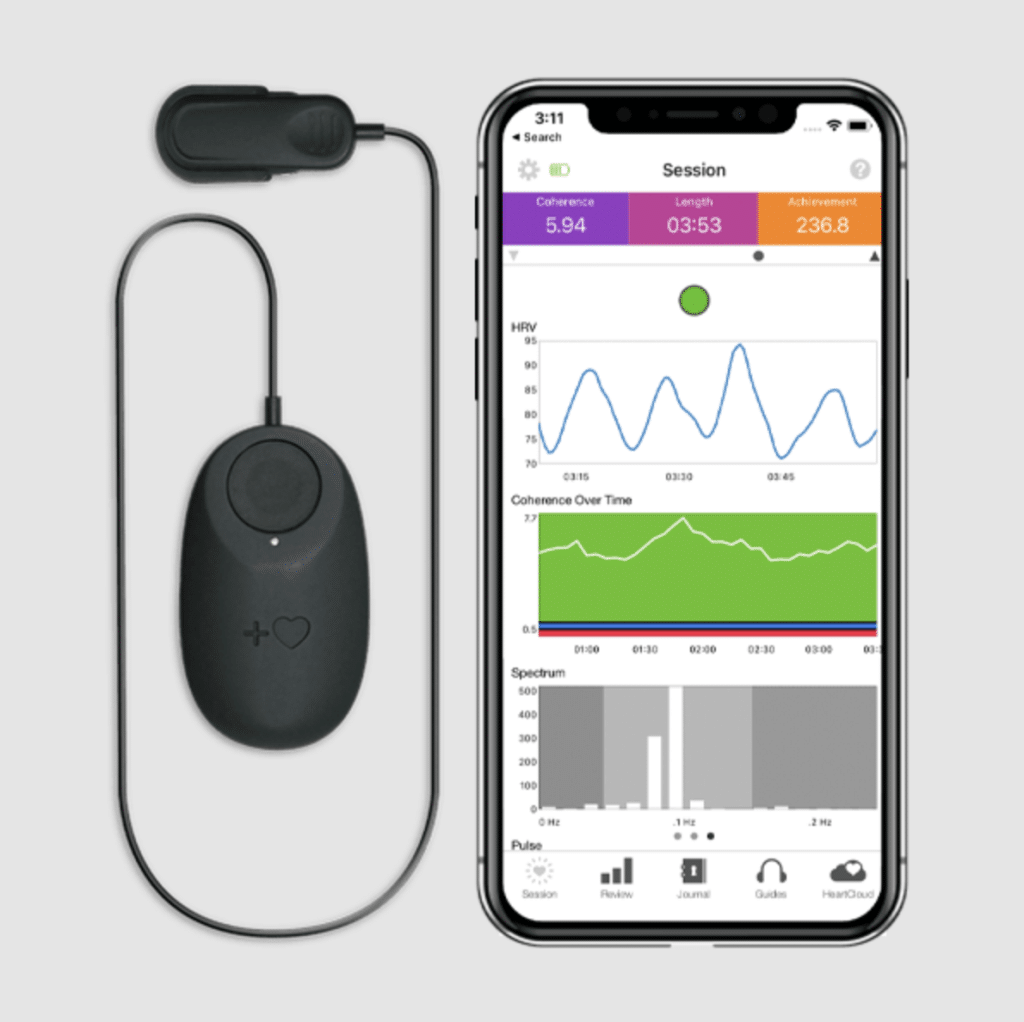
Another tool I often recommend is HeartMath.
Not as relaxation.
As training.
HeartMath uses heart rate variability (HRV) biofeedback to teach coherent breathing patterns that increase vagal tone.
Higher vagal tone supports:
When practiced consistently at home, it becomes a way of teaching the nervous system flexibility.
And flexibility is resilience.
If the body can move from activation to calm more efficiently during the day, it is more likely to transition at night.
Magnesium glycinate can play a helpful supportive role — especially if magnesium levels are low.
Magnesium participates in hundreds of biochemical reactions in the body, including regulation of the nervous system.
It helps support:
If someone is magnesium deficient, correcting that matters.
But magnesium alone does not override hyperarousal.
It supports the nervous system.
It does not retrain it.
And that distinction is important.
Sleep restoration rarely comes from a single supplement.
It comes from restoring the conditions that allow the nervous system to downshift.
I’m seeing high-functioning people who:
But rarely ask:
Does my nervous system feel safe?
Safety is not weakness.
Safety is physiology.
Safety is the foundation of sleep.
And sometimes the body needs to relearn what safety feels like.
Sleep is not sedation.
It is surrender.
And surrender cannot be forced.
It must be supported.
A few tools I often recommend for people caught in the “tired but wired” pattern:

A powerful nervous system reset. The sensory reduction environment allows the body to downshift into parasympathetic dominance and often produces a deeply restorative state.
HRV-based breathing practice that trains the nervous system toward coherence and vagal tone — helping the body relearn how to move from activation to calm.
A supportive mineral that helps regulate NMDA receptor activity, GABA signaling, and muscle relaxation. Helpful if magnesium levels are low, but best used alongside nervous system regulation practices.
If you’re in the “tired but wired” pattern:
Start gently.
You are not failing at sleep.
Your nervous system may simply be protecting you.
And it may be time to teach it that it no longer needs to.
Sleep is not a badge of productivity.
It is a sign of safety.
And safety can be rebuilt.
Dr. Kathryn Dundas, MD, CCFP
Founder, Medical Director Sublime Life