
By Dr. Kathryn Dundas, MD, CCFP
Sublime Life | The Journal
What I’m listening to. What I’m reading. What I’m watching.
Longevity medicine isn’t just advancing in labs — it’s evolving in conversation, culture, and consciousness.
This week marked a subtle but important shift:
away from what we prescribe
and toward how we interpret, integrate, and live with longevity science.
The launch of Longevity.Technology UNLOCKED is a signal of that change —
more nuance, more policy literacy, and better translation between science, systems, and real life.
This isn’t about hacks.
It’s about discernment.
Longevity.Technology UNLOCKED
A smart bridge between research, regulation, investment, and clinical reality.
It reflects where longevity medicine is actually headed — less hype, more infrastructure.
The Drive
Hosted by Peter Attia, MD.
Still an anchor for mechanistic clarity and long-arc thinking when you want to understand why, not just what.
Being Well
Hosted by Rick Hanson, PhD.
Neuroscience, psychology, and lived experience — a reminder that the nervous system is upstream of everything.
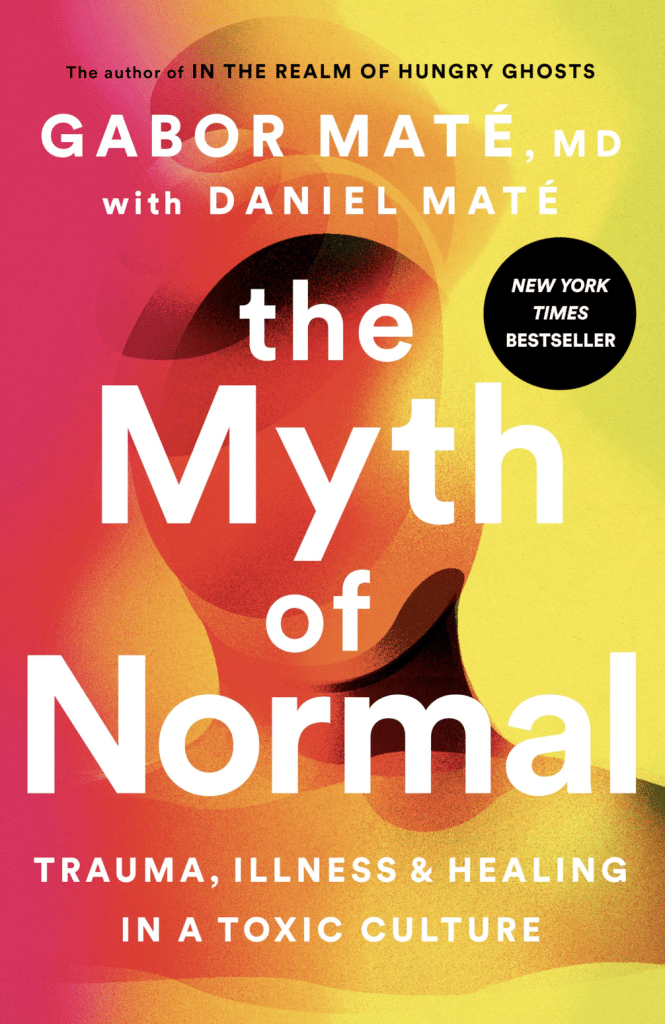
The Myth of Normal
By Gabor Maté, MD, with Daniel Maté.
Not a longevity book in the traditional sense — but essential reading for understanding how trauma, stress, and disconnection quietly shape chronic disease and aging.
Why Zebras Don’t Get Ulcers
By Robert Sapolsky, PhD.
Still one of the clearest explanations of stress physiology and why modern life erodes healthspan over time.
Being Mortal
By Atul Gawande, MD.
A grounding reminder that longevity without meaning, dignity, and choice misses the point.
Tech to Watch (Not Chase):
Rather than “latest gadgets,” the signal this year is interpretation over data volume.
What matters now:
Consumer diagnostics becoming clinically interpretable
Examples to watch:
• Withings — evolving toward multi-system, trend-based insight
• Oura — useful when used gently, as pattern recognition rather than performance scoring
The shift isn’t more numbers — it’s context clinicians can actually use.
Biological age tools moving toward organ-specific insight
Examples to watch:
The future isn’t one “biological age.”
It’s understanding which systems are aging faster — and why.
Not output. Not optimization.
But tools that reinforce parasympathetic tone, sleep consistency, and daily rhythm — often the simplest ones.
Don’t Die: The Man Who Wants to Live Forever
A fascinating cultural moment — and a clear what not to do.
While extreme self-experimentation makes for compelling viewing, it also highlights the risk of turning longevity into control, rigidity, and performance.
Longevity isn’t about domination of the body.
It’s about collaboration with it.
TruPace
by TruDiagnostic
One of the more thoughtful evolutions in biological age testing is the move toward pace of aging, not just a single “age” number.
TruPace focuses on how quickly your biology is changing over time, offering insight into whether current lifestyle, stress load, sleep, movement, and recovery patterns are accelerating or slowing aging processes.
Why this matters:
It’s not about chasing a number.
It’s about understanding direction.
To inquire about or book the TruPace test, email us at
We’ll help determine whether this testing is appropriate for you and how it fits into a broader longevity and healthspan plan.

Where in my life has more data stopped improving my decisions?
What would it feel like to trade constant monitoring for deeper trust in my body’s signals?
Choose:
Let understanding — not consumption — lead.
Longevity isn’t built by chasing every signal.
It’s built by choosing inputs that calm the system, clarify priorities, and sustain meaning.
That’s the conversation worth having now.
— Dr. Kathryn Dundas, MD, CCFP