
This edition of The Journal is arriving a day late.
And honestly, that feels fitting for the topic.
Because we had a long weekend here in Canada with Victoria Day on Monday, the rhythm of the week shifted. Somehow four days began trying to hold five days worth of life. The week got away from me a little — and I suspect many of you know that feeling too.
It’s interesting how quickly losing a single day can disrupt our sense of time, routine, and internal steadiness.
Our brains become deeply attached to rhythm.
Morning rituals.
Commutes.
Appointments.
The predictable spacing between moments.
When those rhythms shift — even slightly — the nervous system notices.
And interestingly, our brains really do experience time differently depending on stress, familiarity, emotion, and nervous system state.
There’s a reason the drive to somewhere unfamiliar often feels longer than the drive home. Researchers believe the brain is working harder on the outbound trip — processing uncertainty, novelty, navigation, anticipation. On the way back, the route is now familiar. The brain predicts the experience more efficiently, so time feels compressed.
Stress does something similar.
When the nervous system shifts into hypervigilance, the brain narrows its focus toward perceived threat, uncertainty, or overload. Cortisol rises. Dopamine signaling changes. Sleep becomes fragmented. Emotional processing becomes heavier. And time can begin to feel either painfully slow — like waiting in a medical office or lying awake at 3 AM — or strangely fast, where entire weeks seem to vanish before we’ve fully lived them.
Modern life asks our nervous systems to absorb an extraordinary amount:
notifications,
constant stimulation,
relationship stress,
decision fatigue,
uncertainty,
emotional labour,
performance pressure,
and very little true stillness.
Over time, this load affects far more than mood.
Chronic nervous system activation can influence:
This is why slowing down is not indulgent.
It is biological medicine.
And presence is not always calm.
Sometimes presence means staying connected to yourself while uncertainty exists around you. It means learning how to sit inside a difficult season without abandoning your nervous system in the process.
One of the things I often remind patients — and myself — is that regulation does not require an hour-long ritual.
Sometimes it looks like:
At my desk, I keep an aromatherapy inhaler nearby. Between patients, I’ll sometimes unscrew the top, take a slow inhale, and simply pause for a moment before moving into the next room. It sounds small, but these micro-moments matter. They signal safety to the nervous system.
Over time, these pauses change physiology.
This is also part of why I created the equine experiential work through Sublime Life and RBR Paint Horses. Horses are profoundly regulating animals. They live entirely in the present moment and respond not to our words, but to our nervous systems. In many ways, they help people reconnect to a slower internal rhythm — one that modern life often pulls us away from.
And it’s also why adaptogens can play a meaningful role during periods of chronic stress.
Our upcoming Adapt Balance formula was designed with this in mind. Adaptogens such as holy basil help support the body’s stress response system by modulating cortisol pathways and supporting nervous system resilience. Rather than simply stimulating the body, adaptogens work more intelligently — helping the system adapt to physical and emotional stressors over time.
Adapt Balance should be arriving within the next couple of weeks. If you haven’t already joined the waitlist, simply reply “WAITLIST” to this email and our team will add you.
In longevity medicine, we often talk about adding years to life.
But equally important is this:
Can we feel present inside our lives while we are living them?
Can we create enough space in the nervous system to actually experience the moments we are moving through — instead of racing past them?
Because sometimes the goal is not to slow time itself.
It’s to slow ourselves enough to finally feel it again.
A thoughtfully formulated adaptogen blend designed to support nervous system resilience, cortisol balance, and stress recovery. Featuring ingredients such as holy basil and other botanicals traditionally used to help the body adapt to emotional and physical stress.
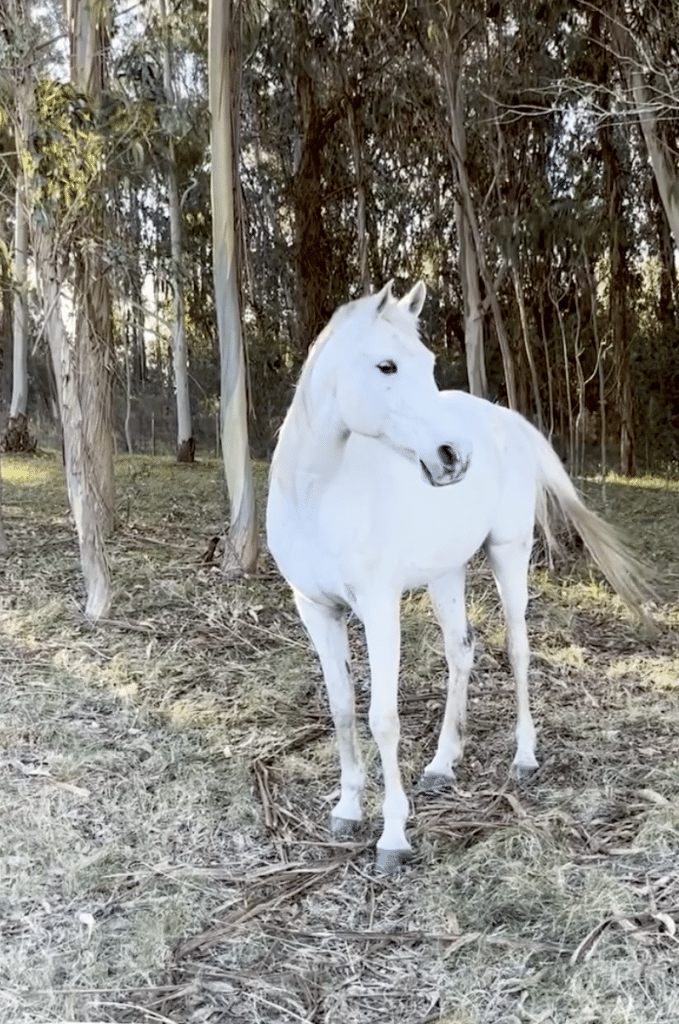
A grounded, supportive equine experience designed for individuals navigating grief, transition, illness, emotional overwhelm, or periods of personal transformation. Through guided interaction with the herd, participants are invited to reconnect with themselves, regulate the nervous system, and move forward with greater clarity and steadiness.
Sessions are held at Dr. Dundas’ ranch in Bergen, Alberta, where the natural setting becomes part of the healing experience itself. Email for further information.
Keep a grounding tool nearby during the day:
an aromatherapy inhaler,
a calming tea,
a grounding stone,
or even a simple breath cue.
Small rituals repeated consistently can profoundly shape the nervous system over time.
Make Presence Your Protocol ✦ Sublime Life